Spanien 2
(18. Mai – 13. Juni 2026)
(Geschrieben von Flinke Feder vom 28. Mai bis 19. Juni 2026, redigiert vom grün gefiederten Papageienvogel; dem Ara,)
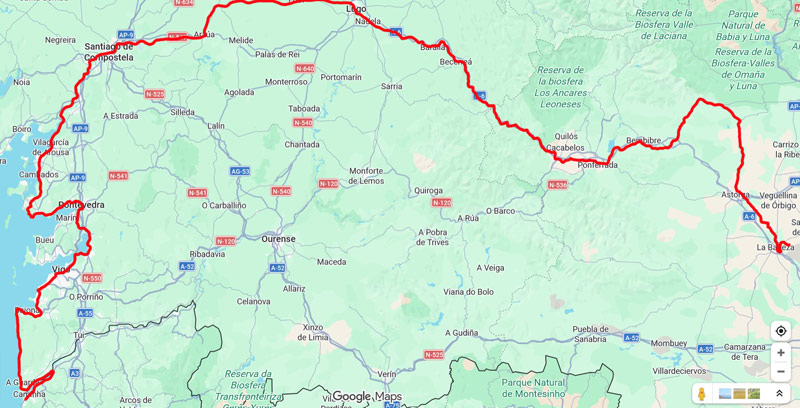
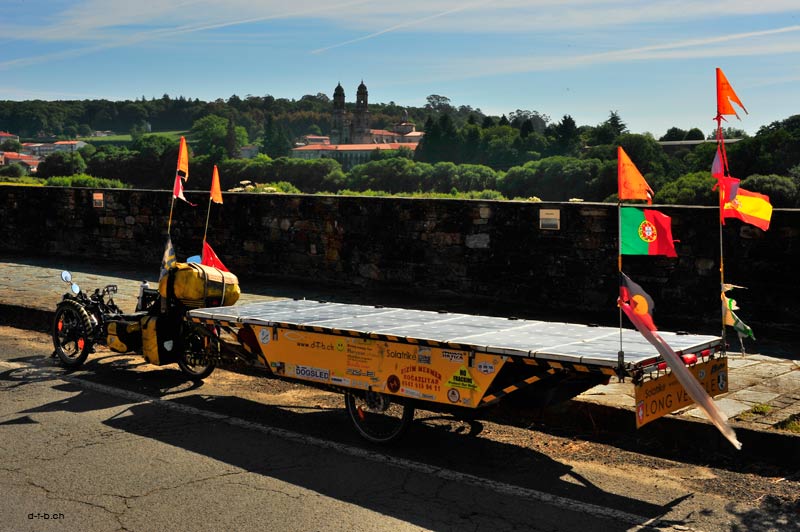
(Die Red.) Das Solatrike reist wieder durch Spanien von der Grenze über Santiago de Compostela bis über das Gebirge in die Nähe von León. Die spannenden Geschichten sind exklusiv im Reisemagazin «Leise Reisen» zu lesen.
Spain 2
(May 18. – June 13. 2026)
(Written by Power Pen from May 28 to June 19. 2026, edited by the green-feathered parrot bird, the macaw)
(The editors) The Solatrike is travelling through Spain once again, from the border via Santiago de Compostela and over the mountains to the vicinity of León. You can read these fascinating stories exclusively in the travel magazine “Gravel Travel".

Entlang der Atlantikküste
Flinke Feder (FF): Deine Solatrike-Reise brachte dich wieder zurück nach Spanien. Wie war der Grenzübertritt?
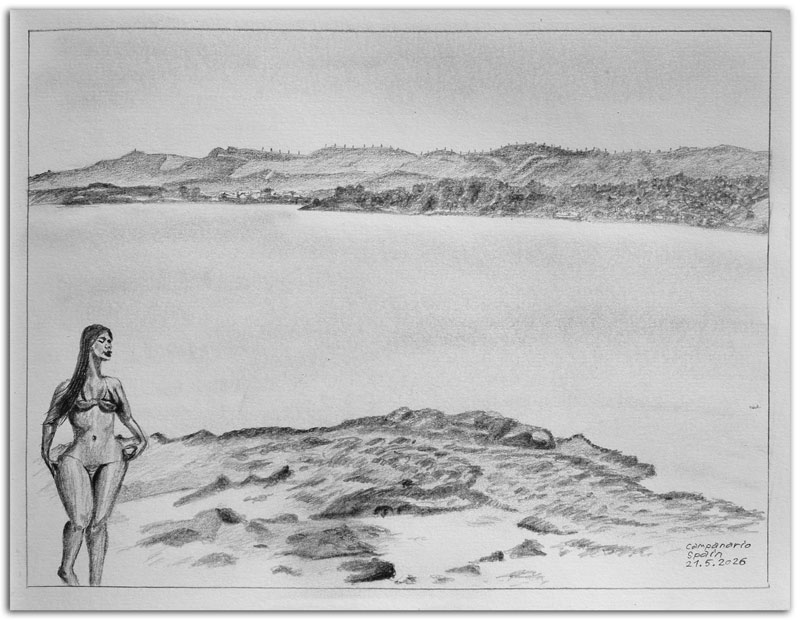
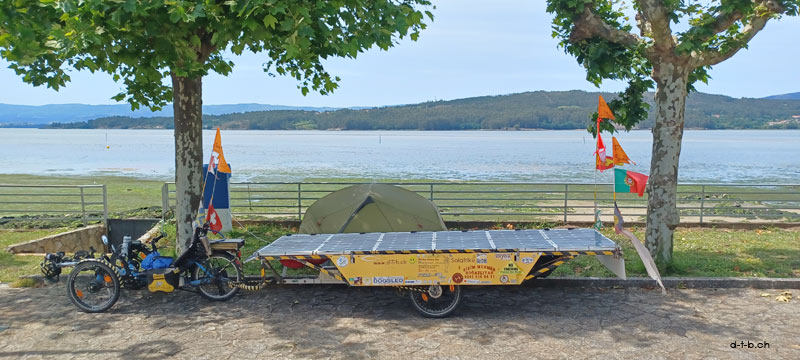
David Brandenberger (DB): Der war absolut mühelos innerhalb der Schengen-Grenzen. Eine gesichtslose Brücke über den Strom leitete mich nach Spanien. Dem Fluss folgte ich auf der anderen Seite zur Mündung, bis ich vor dem Berg stand, den ich vor zwei Tagen von Gegenüber skizzierte. Die Strecke führte mich anschliessend der Küste entlang. In Baiona erblickte ich die grandiose Festung und radelte bis zum Samil-Beach vor Vigo.
FF: Welcher Schock erfuhrst du dort?
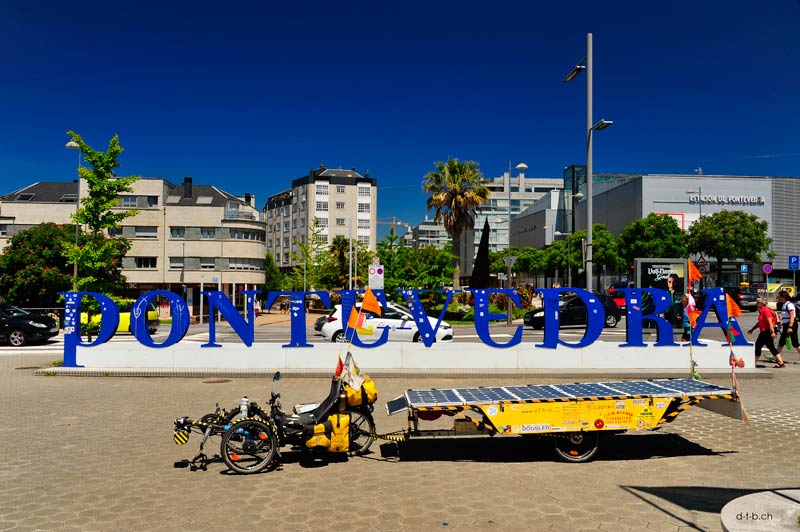
DB: Der Campingplatz war wegen Renovation geschlossen. Was nun? 4km zurück in Canido ist ein anderes Camping, nichts wie los und retourpedalen. Am nächsten Morgen regnete es auf das Zelt und ich beschloss, einen Tag Pause einzulegen. Bis der Regen sich verzog, war es zu spät, um weiter zu radeln. Einen Tag nachfolgend zog ich los und irrte durch Vigo mit gefühlten tausend Rotlichtern. Ich kam mir vor, wie eine Schnecke. Die Landstrasse führte mich zu den sonstigen Dörfern und Städten. Bei Pontevedra wurde wegen Bauarbeiten eine Strasse gesperrt und die Umleitung brachte mich steil den Berg hinauf und hinten wieder runter. Einen weiteren Hügel wartete auf meine Überquerung und anschliessend erreichte ich die Küste, derer ich entlang radelte.
FF: Was für eine Überraschung erlebtest du in Pontenovo?
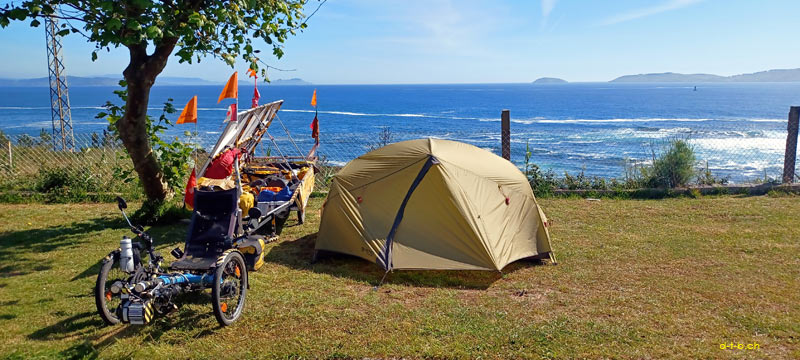
DB: Der Campingplatz war gar keiner, sondern nur eine Bungalowvermietung. Ich pedalte weiter, doch das baldigste Camping war steil eine Kiesstrasse hinunter, da wäre ich nicht mehr hinausgekommen. Darum kroch ich über zusätzliche Hügel und gelangte nach Monte Cabo, einem Camping hoch über den Klippen mit einem prächtigen Blick über das Meer. Leider kam ich spät an und mir reichte die Zeit nur noch, um das Zelt aufzustellen, zu kochen und zu duschen. Dann war es schon dunkel. Am Morgen wickelte ich das tropfnasse Zelt ein und überquerte einige Hügel, die weniger steil sind, als Komoot anzeigte, doch die 6% Steigung am Anfang wird nicht gezeigt.
FF: Welches Glück erfuhrst du in Vilagarcia?


Santiago de Compostela
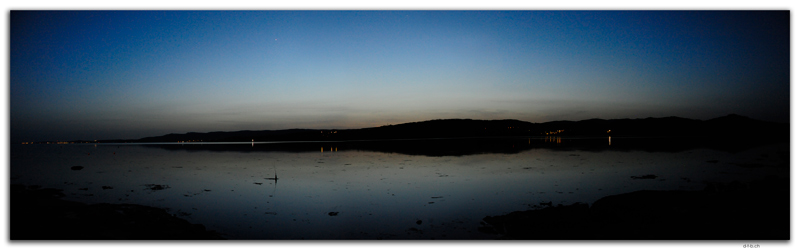
DB: Ich erblickte einen Fahrradladen, parkte das Solatrike und fragte mit wenig Erwartung, ob sie ein 6-Gang Zahnkranz haben mit 14 bis 34 Zähnen. Das suchte ich schon überall vergeblich, darum machte ich mir keine Hoffnungen. Zu meinem Erstaunen zog der Inhaber solch ein Stück aus der Schublade und ich fasste mein Glück kaum. Einige Kilometer weiter pflanzte ich das Zelt neben den Fluss Ulla und skizzierte die Aussicht. Ich war nicht mal fertig, waren die Steine im Vordergrund von der einkommenden Flut überschwemmt.
FF: Wohin brachte dich der nächste Abschnitt?
DB: Anfangs bewältigte ich im zweiten Gang eine 8% Steigung über die Bahnlinie. Der erste und sechste Gang sind abgeschabt und nicht mehr zu gebrauchen, darum ist ein Wechsel dringend nötig. Meine Strecke wählte ich so flach, wie möglich mit einer Abkürzung durch den Wald. Leider entpuppte sich eine Zufahrtsstrasse als kopfsteingepflastert und ich würgte mich eine alternative steile Strasse hoch. Auf der weiteren Route entdeckte ich immer mehr laufende Muscheln am Strassenrand…
FF: Wie bitte? Wir fordern um Erklärung.
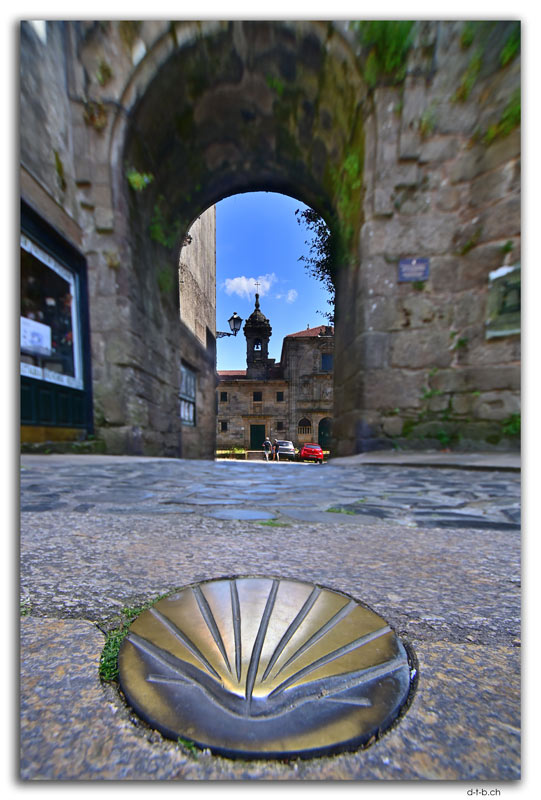
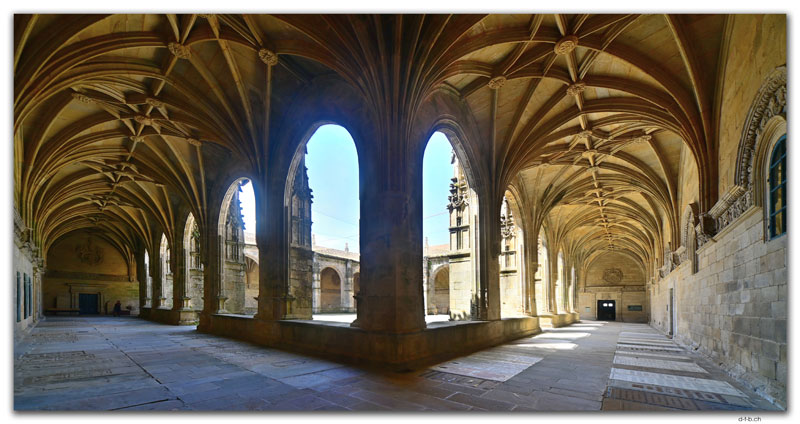
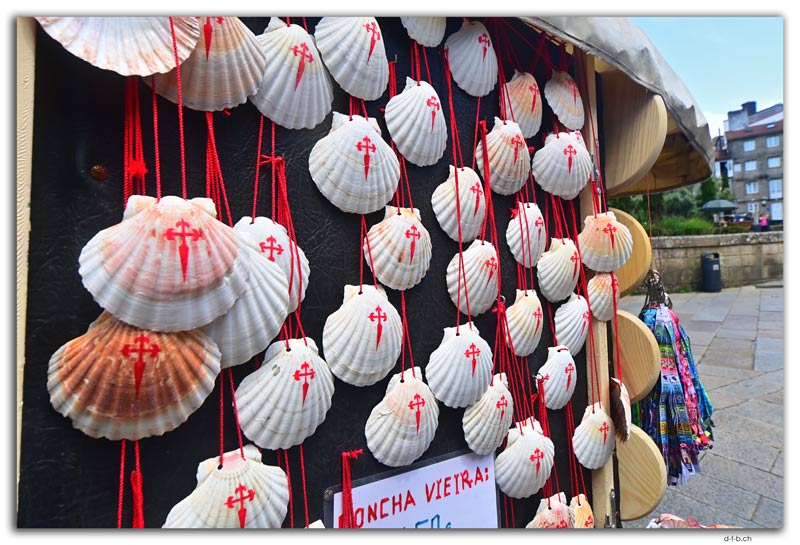
DB: Leute, die den Jakobsweg pilgern, mit angehängten Muscheln an ihren Rucksäcken meine ich damit. Eine zermürbende Durchquerung von Santiago de Compostela folgte, auf der ich wieder einmal über Kopfsteinpflaster rumpelte. Im Campingplatz buchte ich für drei Nächte und würgte mich den steilen, holprigen Weg hoch. Prompt blieb ich kurz vor der letzten Abzweigung stecken. Ich sass fest, klammerte mich an die Bremsen, um nicht rückwärts den Hang hinunterzurollen, und rief um Hilfe. Einige nette Camper schoben mich hinauf.
FF: Besuchtest du gleich die Stadt?
DB; Am Samstag rasselte ich zum Veloladen, wo ich ein Paket hinschicken liess. Dort wechselte ich mit ihrer Hilfe daneben meinen 6-Gang Zahnkranz. Beim Zurückradeln klapperte es und ich versuchte, die Gänge zu justieren ohne Erfolg. Das Klappern blieb. Erneut sauste ich zum Fahrradladen und erstand eine fabrikneue Kette. Sie verkauften mir dazu ein neues Ritzel für die Pedale und ich machte mich ans Werk. Die Fahrradkette war in einer Stunde montiert. Doch als ich alle Zahnräder auseinanderschraubte, stellte ich fest, dass das Gekaufte nicht passte. Kurzerhand reinigte ich die Ritzel und schraubte sie wieder zusammen. Neue bestellte ich online und deren Ersatz ist nicht so dringend.
FF: Liessest du die Sehenswürdigkeiten links liegen?



Sehenswürdigkeiten und Arbeiten
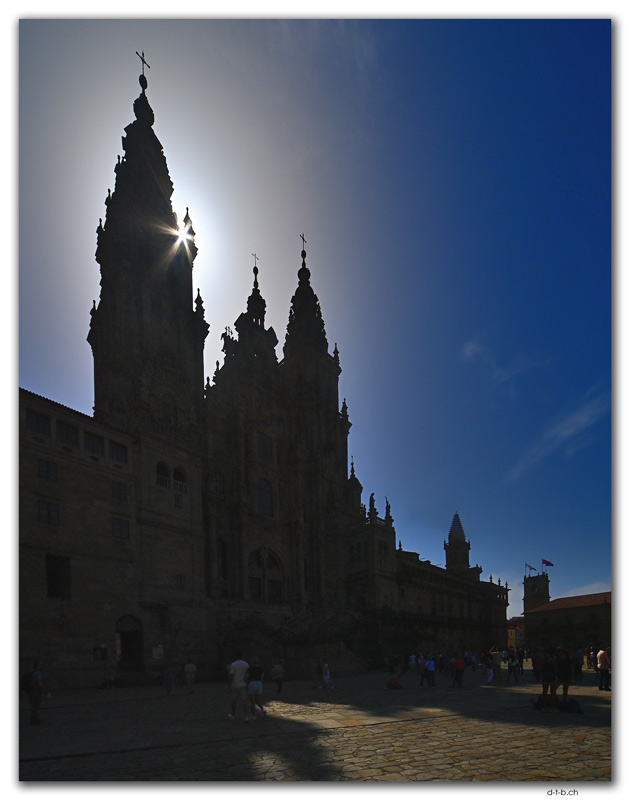
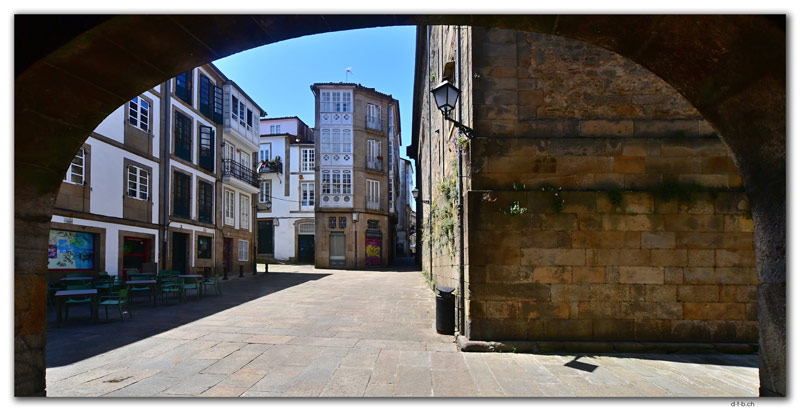
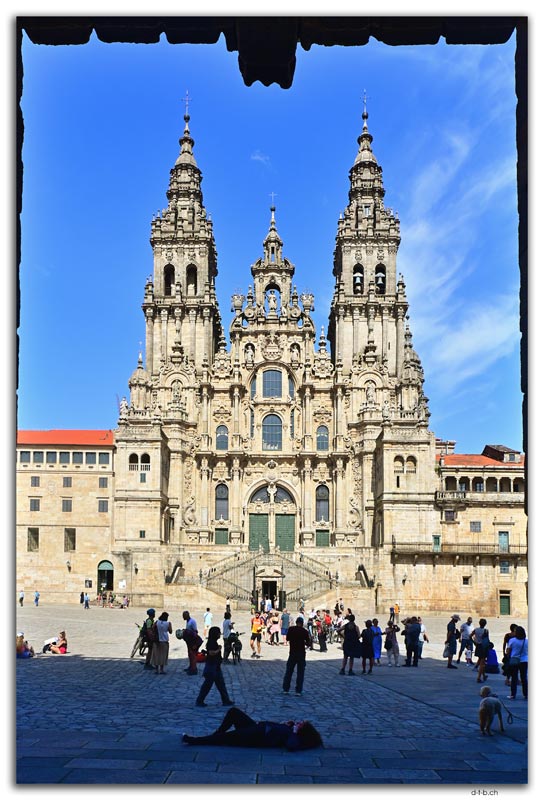
DB: Inzwischen solltest du mich kennen. Am Sonntag pilgerte ich in die Stadt und plante, dem Gottesdienst in der Kathedrale beizuwohnen. Die Schlange war dennoch so lang, dass ich mir es überlegte. Ich wäre erst drin, wenn die Predigt vorüber war. Ich musste ja unbedingt um Pfingsten da sein. Rechtsumkehrt besuchte ich lieber das Museum mit Ausblicken über die Stadt und Raubgold aus Südamerika. Ich irrte durch die Gässchen und zog von Kirche zu Kirche. Doch die waren alle geschlossen und ich beschloss, den Rundweg abzubrechen. Das zeitgenössische Museum überraschte mich leider nicht und ich schlenderte weiter durch die Gassen für Fotomotive.
FF: Hast du doch einen Blick in die Kathedrale geworfen?
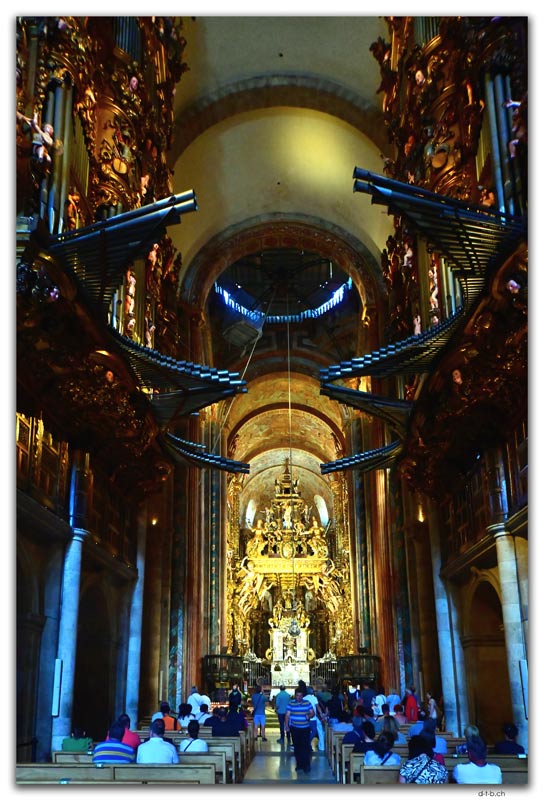
DB: Später war keine Schlange mehr und ich schlüpfte durch das Tor hinein. Als reformierter sind die pompös mit Gold belegten Altäre unbegreiflich und nicht nachvollziehbar. Leider erwarb ich ein falsches Ticket und zog nächsten Tags nochmals in die Stadt, um die berühmte Portico Gloria vom Meister Matteo zu bestaunen. Fotos und Filme sind nicht erlaubt. Von einem Park aus genoss ich die Aussicht auf die Grossstadt und im Bikeladen retournierte ich das nicht passende Ritzel. Wenigstens erhielt ich das Geld zurück.
FF: Wieso bist du nicht gleich weitergeradelt?
DB: Meine Arbeitsliste zog sich in die Länge, darum beschloss ich einige Tage im Zeltplatz zu bleiben. Ich bearbeitete Fotos, Filme, Blogs, plante die nächsten Strecken und führte Reparaturen aus, dass die Zeit nur vorbeiflog. Nach sieben Tagen nahm ich den weiteren Weg unter die Räder. Leider verabschiedete sich genau um die gleiche Zeit das heitere Wetter. Eine Menge Anstiege standen vor mir und keine Energie kam vom Himmel hinein. Auf einer Anhöhe bemerkte ich, dass ein Solarladeregler nicht funktionierte, und wechselte den an Ort und Stelle aus. Selbst wenn inzwischen zwei Paneele mehr arbeiteten und ich ein Drittel zusätzliche Energie tanken könnte, fiel das Ergebnis ernüchternd aus. Es war so mächtig bewölkt, dass sich fast nichts änderte. Ich pedalte weiter, bis ich nach 40 km in Arzúa mein Zelt ins Camping stellte.
FF: Warum bliebst du hier hängen?
DB: Die Batterie ist womöglich ebenso austauschfällig. Es standen lange steile Strecken an für die nächsten Tage, doch die Wetterprognose war katastrophal. Die zwei weiteren Orte haben nur teure Hotels zum Übernachten, wo ich nicht hängen bleiben hinziele und dieses Camping ist mit € 10 inkl. Strom fast ein Geschenk. Dazu fand ich in einem Ort, fünf Fahrtage entfernt, eine Einstellmöglichkeit für das Solatrike.
FF: Wieso musst du es einstellen?



Über die Berge
DB: Mein Neffe Diego heiratet am 20. Juni und ich bin eingeladen beizuwohnen. Das heisst: ich muss das Solatrike in Spanien lassen, in die Schweiz und zurückreisen. Da ich es aber nur zwei Wochen unterbringen darf, kann ich nicht zu früh eintreffen. Darum wartete ich lieber in Arzúa auf ein günstiges Wetterloch, als in einem teuren Hotel. Eine geschlagene Woche blieb ich hängen und plante dabei die weitere Reise durch Südfrankreich. Wie weit ich in diesem Sommer kommen werde, sehe ich dann. Unterdessen spüre ich mein Alter. Ich brauche mehr und längere Pausen. Tagelang ohne Rast durch zu fahren zahlen ihren Zoll. Somit waren die zwei Wochen Unterbruch bitternötig.
FF: Wann fuhrst du weiter?
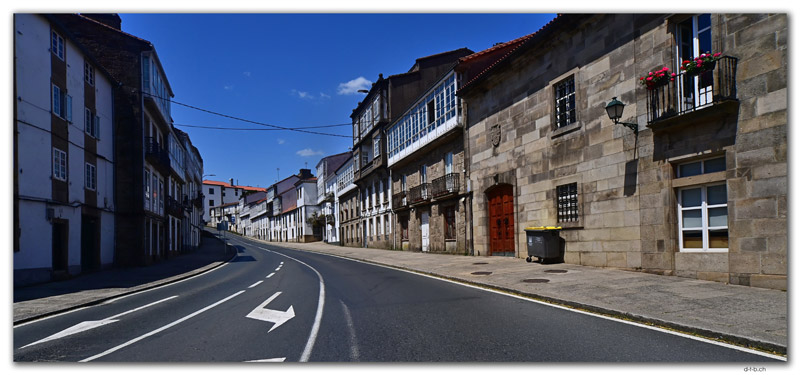
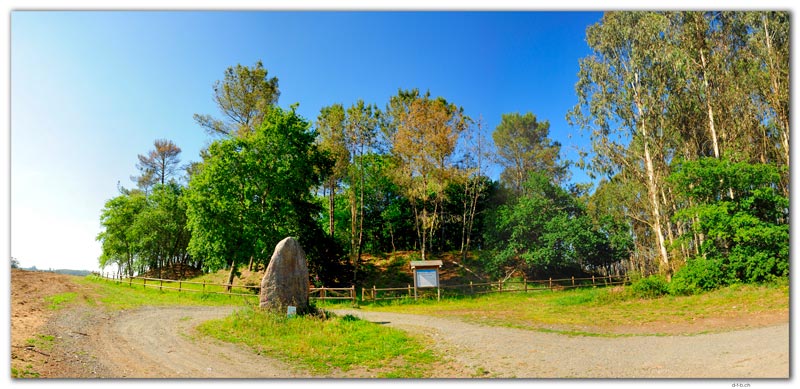
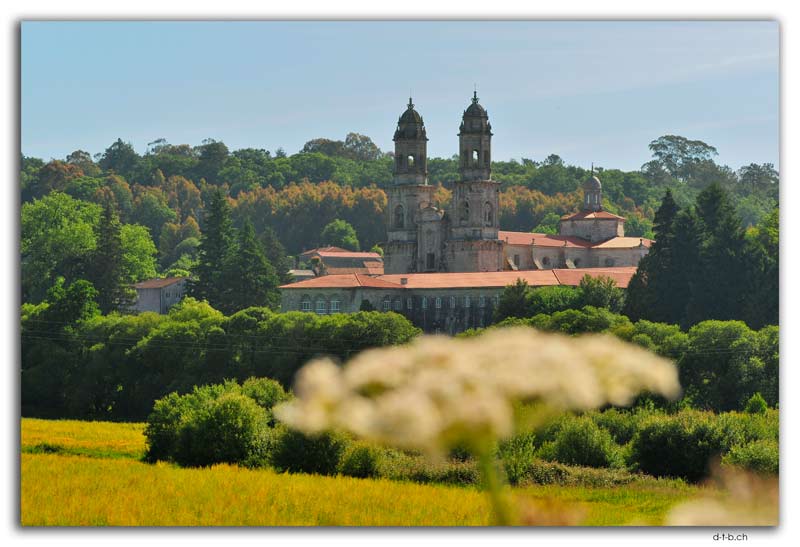
DB: Am Sonntag 7. Juni brach ich los. Das war die letzte Gelegenheit, egal wie das Wetter war. Dieses zeigte sich von der sonnigen Seite und ich pedalte frohen Mutes los hinauf und hinunter durch die hügelige Landschaft. Ich umrundete das Kloster in Sobrado und kroch den Anstieg hoch bis 600 Höhenmeter. Hinten schoss ich steilere Strassen nach unten und war heilfroh, von dieser Seite zu kommen. Nahe einem alten Dolmen genoss ich den Lunch und sauste weiter über Nebenstrassen bis nach Lugo. Dort mietete ich ein Zimmer im Hotel, da es keinen Campingplatz hat. Sonntags etwas zu essen zu erhalten ist schwierig und ich deckte mich mit teurem Tankstellenfrass ein.
FF: Wie viele Höhenmeter erlangtest du?
DB: Auf 64,1 km kamen fast 1000 Höhenmeter zusammen und in den nächsten Tagen zählten sich etliche mehr dazu. 924 m auf 50 km am Montag, 784 m auf 63 km am Dienstag, 959 m auf 80 km am Mittwoch und schlappe 74m auf 46 km am Donnerstag. Da ich in Lugo eine Abzweigung verpasste, nahm ich einen Höcker mehr mit. Nach einer langen flacheren Passage überquerte ich den ersten Hügel. Dahinter folgte ich einer frisch geteerten Fahrbahn durch ein Tal dem Fluss entlang und geriet auf einen Feldweg. Ich befürchtete das Schlimmste, doch im nächsten Dorf führte eine asphaltierte Strecke langsam steigend hoch. Zwei steile Stellen hatte ich zu bezwingen, bis ich oben war.
FF: Wohin brachte dich der Weg?
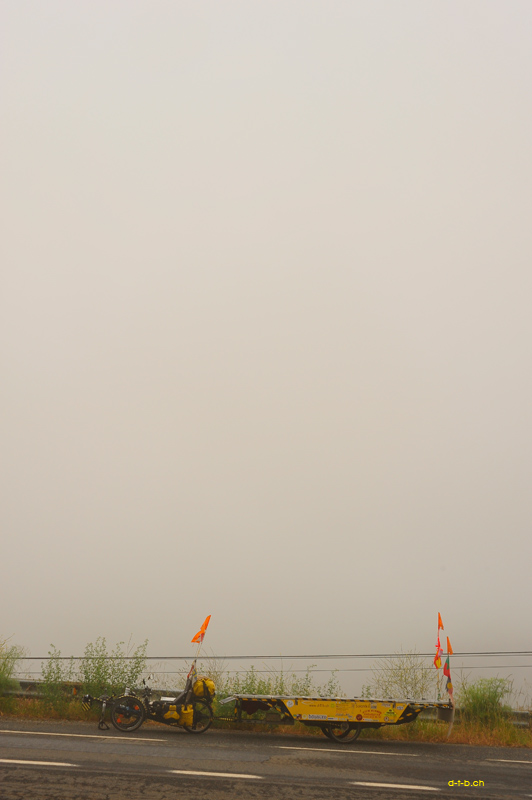
DB: Steil hinunter bis die Bremsen glühten nach Becerreá zu einem weiteren Hostal. Am Morgen wachte ich bei heftiger Bewölkung auf und ich hatte einen langen Aufstieg vor mir. Mit 2 – 4 % führte die Strasse wenigstens moderat hoch und ich kroch mit 11 km/h hinauf. Da aber keine Energie hineinkam, leerte sich die Batterie immer schneller, bis ich in den Wolken, 3 km und 130 m vor dem Pass anhielt. Eine Stunde wartete ich auf besseres Wetter, das laut Prognose kommen würde. Zu meinem Erstaunen füllte sich die Batterie trotz dichter Nebelschwaden wieder. Der Nebel lichtete sich etwas und ich pedalte bis zum Pass hoch. Auf 1099m biss ich in den Apfel und sauste darauf genüsslich die sich windende Strasse hinunter. In Villafranca da Bierzo drehte ich eine Runde, um den Ort anzugucken, und kaufte Esswaren ein. Abends stellte ich mein Zelt im Camping Bierzo auf.
FF: War das Wetter besser am Morgen?




Weitere Passfahrten
DB: Das änderte sich schon beim Bergpass. Die Wolken blieben dort hängen. Die Strecke spiegelte den Vortag etwas. Diesmal strampelte ich lange einem flachen Teilstück vorwärts bis Ponferrada. Anstelle des Flusses folgend, bauten sie über den Hügel – ist scheinbar lustiger. Das empfand ich nicht. Ab Bembibre folgte ich dem schlängelnden Fluss entlang bis Torre del Bierzo. Der Passstrasse nachfolgend geriet ich sachte hoch. Die von Komoot berechneten 10 – 15 % Steigungen fielen zum Glück aus und ich fand diesen Anstieg angenehmer als den vom Vortag. Auf 1122 m war ich oben und pedalte gegen den Wind über das Hochplateau mit leichter Neigung hinunter. Bei Villamejil erreichte ich den Campingplatz für meine Nachtruhe.
FF: Das war eine anstrengende Tour. Konntest du dich erholen?
DB: Der letzte Tag war gemächlicher und mehrheitlich bergab. Erst quatschte mich ein Typ aus Barcelona voll und hinterher führte mich mein Weg auf Nebenstrassen durch kleine Weiler bis nach Requeras de Arriba, wo ich bei Warmshowers Gastgeber unterkam. Das Solatrike brachten wir zum nächsten Dorf, wo wir es in die Scheune ihrer Eltern unterbringen konnten. Per Bus reiste ich nach Madrid, wo ich ein Kunstmuseum besuchte und durch die Strassen schlenderte, bevor ich in die Schweiz zurückreiste.
FF: Die nachfolgenden Geschichten erzählen wir im weiteren Blog.


Word-Document for download and print

PDF-Document for download and print
Passende Links dazu:


Along the atlantic coast
Power Pen (PP): Your Solatrike journey brought you back to Spain. How was crossing the border?
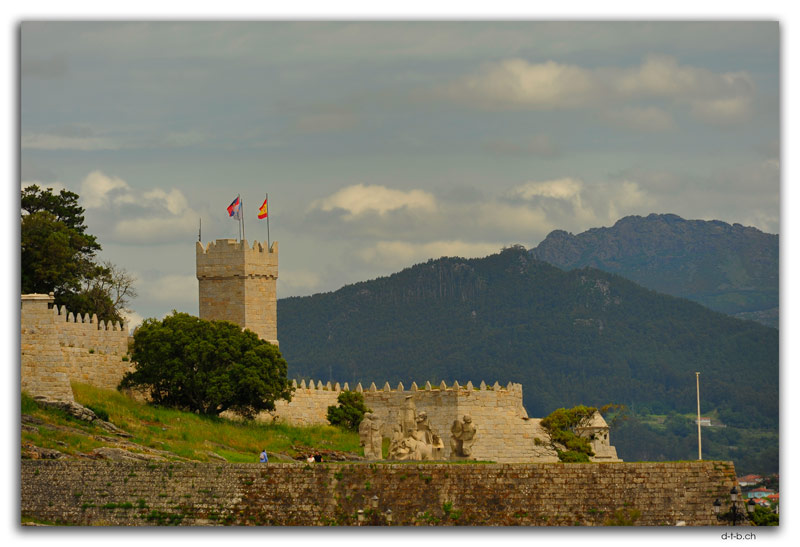
David Brandenberger (DB): It was absolutely effortless within the Schengen area. A nondescript bridge over the river led me into Spain. I followed the stream on the other side to its mouth until I stood before the mountain I’d sketched from across the water two days earlier. The route then took me along the coast. In Baiona, I caught sight of the magnificent fortress and cycled on to Samil Beach near Vigo.
PP: What surprise did you encounter there?
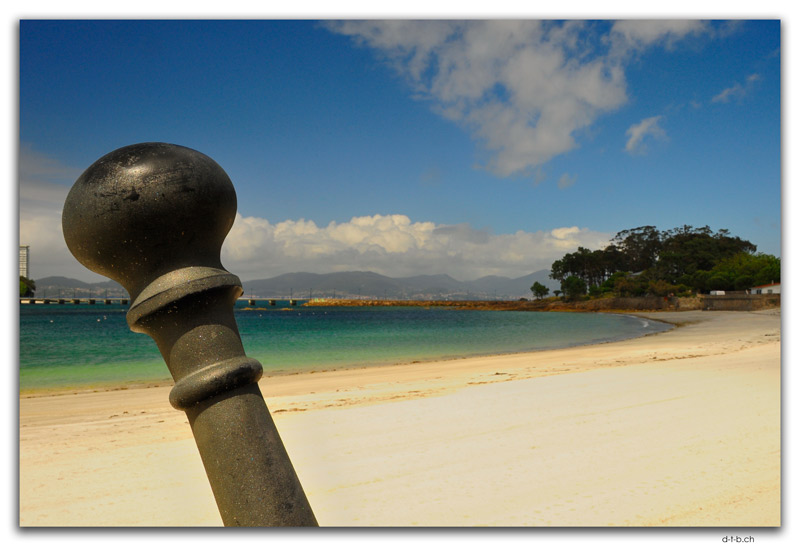
DB: The campground was closed for renovations. What now? There’s another campground 4 km back in Canido—so off I went, pedaling back. The next morning, rain pelted my tent, and I decided to take a day off. By the time the rain cleared, it was too late to keep cycling. The following day, I set out and wandered through Vigo, which seemed to have a thousand red lights. I felt like a snail. The country road led me to the other villages and towns. At Pontevedra, a road was closed due to construction, and the detour took me steeply up the mountain and back down the other side. Another hill awaited me, and after crossing it, I reached the coast, which I cycled along.
PP: What kind of surprise did you encounter in Pontenovo?
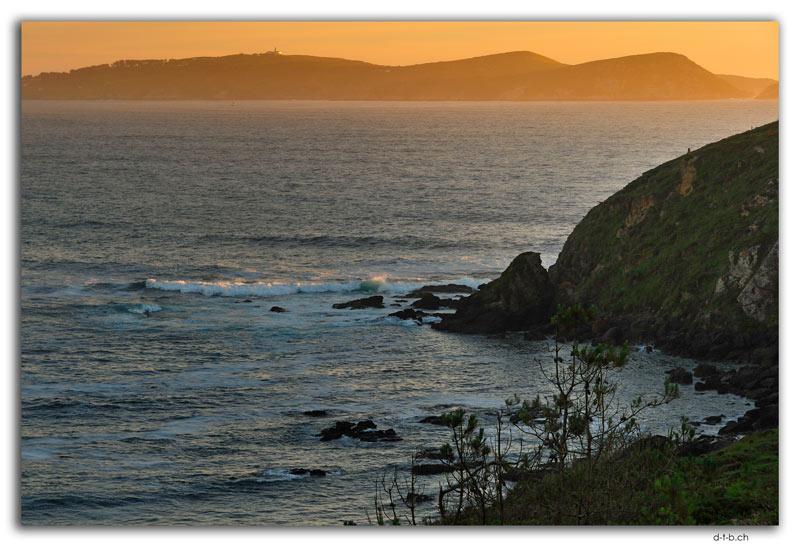
DB: The campground wasn’t a campground at all, but just a place that rented out bungalows. I kept pedaling, but the nearest campground was down a steep gravel road—I wouldn’t have been able to get back up. Instead, I crawled over a few more hills and made it to Monte Cabo, a campground high above the cliffs with a magnificent view of the sea. Unfortunately, I arrived late and only had enough time to set up the tent, cook, and shower. Then it was already dark. In the morning, I packed up the soaking-wet tent and crossed a few hills that were less steep than Komoot indicated, though the 6% grade at the start isn’t shown.
PP: What good fortune did you experience in Vilagarcia?


Santiago de Compostela
DB: I spotted a bike shop, parked the Solatrike, and asked, with little expectation, if they had a 6-speed freewheel with 14 to 34 teeth. I’d been looking for one everywhere to no avail, so I wasn’t holding out much hope. To my amazement, the owner pulled one out of a drawer, and I could hardly believe my luck. A few kilometers further on, I pitched my tent next to the Ulla River and sketched the view. I wasn’t even finished before the rocks in the foreground were flooded by the rising tide.
PP: Where did the next section take you?
DB: At first, I managed an 8% incline over the railroad tracks in second gear. The first and sixth gears are worn out and no longer usable, so a replacement is urgently needed. I chose a route that was as flat as possible, taking a shortcut through the forest. Unfortunately, an access road turned out to be cobblestone, so I struggled my way up an alternative steep road. Further along the route, I discovered more and more walking mussels on the side of the road…
PP: Excuse me? We demand an explanation.
DB: I’m talking about people on the Camino de Santiago, the ones with scallop shells attached to their backpacks. A grueling trek through Santiago de Compostela followed, during which I once again bumped along the cobblestones. I booked three nights at the campground and struggled my way up the steep, bumpy path. Sure enough, I got stuck just before the last turn. I was stuck, clinging to the brakes to keep from rolling backward down the slope, and called for help. Some nice campers pushed me up.
PP: Did you visit the city right away?
DB: On Saturday, I rattled over to the bike shop, where I had a package sent. There, with their help, I changed my 6-speed freewheel. On the ride back, it was rattling, and I tried to adjust the gears without success. The rattling persisted. I rushed back to the bike shop and bought a brand-new chain. They sold me a new sprocket for the pedals as well, and I got to work. The bike chain was installed in an hour. But when I unscrewed all the sprockets, I realized that the one I’d bought didn’t fit. Without further ado, I cleaned the sprockets and screwed them back together. I ordered new ones online, and replacing them isn’t that urgent.
PP: Did you skip the sights?



Sightseeing and works
DB: By now you should know me. On Sunday, I made my way into town and planned to attend the service at the cathedral. The line was so long, though, that I had second thoughts. I wouldn’t get in until the sermon was over. I absolutely had to be there for Pentecost. Instead, I decided to visit the museum with views of the city and looted gold from South America. I wandered through the narrow streets and went from church to church. But they were all closed, so I decided to cut the tour short. The contemporary museum didn’t surprise me, unfortunately, so I strolled on through the streets looking for photo opportunities.
PP: Did you end up taking a peek inside the cathedral after all?
DB: Later, the line was gone, so I slipped through the gate and went in. As a Protestant, the pompous, gold-plated altars are incomprehensible and hard to fathom. Unfortunately, I bought the wrong ticket and went back into town the next day to marvel at the famous Portico Gloria by Master Matteo. Photos and videos aren’t allowed. From a park, I enjoyed the view of the big city, and at the bike shop, I returned the wrong sprocket. At least I got my money back.
PP: Why didn’t you just keep cycling?
DB: My to-do list was getting longer, so I decided to stay at the campground for a few days. I edited photos, videos, and blog posts, planned the next routes, and made repairs—time just flew by. After seven days, I set off again. Unfortunately, the sunny weather took its leave at exactly the same time. A lot of climbs lay ahead of me, and no energy was coming in from the sky. On a hill, I noticed that a solar charger wasn't working and replaced it on the spot. Even though two more panels were now working and I could charge a third more energy, the result was sobering. It was so heavily overcast that almost nothing changed. I kept pedaling until, after 40 km, I pitched my tent at the campground in Arzúa.
PP: Why did you get stuck here?
DB: The battery might need replacing as well. There are long, steep stretches ahead for the next few days, but the weather forecast is terrible. The other two towns only have expensive hotels to stay in, which I don’t want to get stuck in, and this campground is almost a steal at €10 including electricity. Plus, I found a place to store the Solatrike in a town five days’ ride away.
PP: Why do you have to store it?


Over the mountains
DB: My nephew Diego is getting married on June 20, and I’m invited to attend. That means I have to leave the Solatrike in Spain and travel to Switzerland and back. But since I’m only allowed to store it for two weeks, I can’t arrive too early. That’s why I’d rather wait here for a break in the bad weather than stay in an expensive hotel. I ended up staying put for a full week, using the time to plan the rest of my journey through the south of France. I’ll see how far I get this summer. In the meantime, I’m starting to feel my age. I need more breaks, and longer ones at that. Riding for days on end without a rest takes its toll. So those two weeks’ break were absolutely essential.
PP: When did you set off again?
DB: I left on Sunday 7 June. That was my last chance, whatever the weather. The sun was shining, so I was in high spirits as I cycled up and down through the hilly countryside. I cycled round the monastery in Sobrado and struggled up the climb to an altitude of 600 metres. On the way down, I hurtled down steeper roads and was absolutely delighted to be coming from that direction. Near an old dolmen, I enjoyed my lunch and whizzed on along side roads all the way to Lugo. There, I booked a room in a hotel, as there’s no campsite. It’s difficult to get anything to eat on a Sunday, so I stocked up on expensive petrol station grub.
PP: How much elevation gain did you manage?
DB: Over 64.1 km, I clocked up almost 1,000 metres of elevation gain, and quite a few more were added over the next few days. 924 m over 50 km on Monday, 784 m over 63 km on Tuesday, 959 m over 80 km on Wednesday and a mere 74 m over 46 km on Thursday. As I missed a turn-off in Lugo, I ended up tackling an extra hill. After a long, flatter stretch, I crossed the first hill. Beyond it, I followed a freshly tarmacked road through a valley alongside the river and ended up on a dirt track. I feared the worst, but in the next village a tarmac road led gently uphill. I had to tackle two steep sections before I reached the top.
PP: Where did the route take you?
DB: Steeply downhill – until the brakes were glowing – towards Becerreá to another hostel. In the morning I woke up to heavy cloud cover and had a long climb ahead of me. With a gradient of 2–4 per cent, the road at least climbed moderately, and I crawled up at 11 km/h. But as no energy was coming in, the battery drained faster and faster until I stopped in the clouds, 3 km and 130 m from the pass. I waited an hour for better weather, which the forecast said was on its way. To my amazement, the battery recharged despite the thick swathes of fog. The fog lifted slightly and I cycled up to the pass. At 1099m, I took a bite out of my apple and then whizzed down the winding road with relish. In Villafranca da Bierzo, I had a look around the town and bought some food. In the evening, I pitched my tent at Camping Bierzo.
PP: Was the weather better in the morning?



More mountain passes
DB: It had certainly changed by the time I reached the mountain pass. The clouds were hanging there. The route was the mirror image of the previous day’s. This time, I pedalled for a long time along a flat stretch towards Ponferrada. Instead of following the river, they’d built the road over the hill – apparently that’s more fun. I didn’t think so. From Bembibre, I followed the meandering river all the way to Torre del Bierzo. Following the pass road, I found myself climbing gently. Fortunately, the 10–15 per cent gradients calculated by Komoot didn’t materialise, and I found this climb more pleasant than the one the day before. I reached the top at 1,122 metres and cycled down the gently sloping high plateau into a headwind. Near Villamejil, I reached the campsite for the night.
PP: That was a gruelling ride. Did you manage to recover?
DB: The last day was more leisurely and mostly downhill. First, a bloke from Barcelona chatted my ear off, and afterwards my route took me along side roads through small hamlets to Requeras de Arriba, where I stayed with a Warmshowers host. We took the Solatrike to the nearest village, where we were able to store it in their parents’ barn. I travelled by bus to Madrid, where I visited an art museum and strolled through the streets before heading back to Switzerland.
PP: We’ll tell the rest of the story in the next blog post.



Related Links:


Write a comment